Category: Notes

Notes

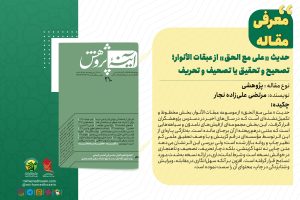
Article: A Critique and Review of the Critical Edition of “Hadith Ali ma‘a al-Haqq” from Abaqat al-Anwar: Critical Editing and Research, or Corruption and Distortion?

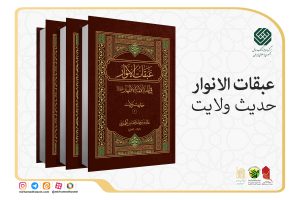
“Hadith Ali ma‘a al-Haqq,” from the Abaqat al-Anwar encyclopedia, is an incomplete manuscript section that became available to researchers in recent years. This section consists of a collection of unorganized research slips and rough notes, most of which were written by copyists unfamiliar with the relevant vocabulary and terminology; consequently, what has survived is a disordered text containing numerous errors. Recently, a portion of these notes that possesses greater order and continuity was selected by an institute in Qom and published with grand claims of “critical editing, research, and annotation” and described as “a rarely matched scholarly investigation.”
Notes

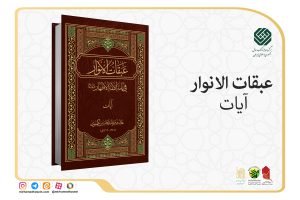
Re-examining the “Manhaj of the Verses” in ʿAbaqāt al-Anwār

Among the different sections of ʿAbaqāt al-Anwār, its “First Manhaj” holds a fundamental position in explaining the question of Imamate. This section, commonly known by the title “Verses,” may at first appear to be devoted solely to examining the verses that indicate Imamate; however, a more careful study of the structure of ʿAbaqāt shows that this understanding is incomplete and, to some extent, incorrect.

Notes

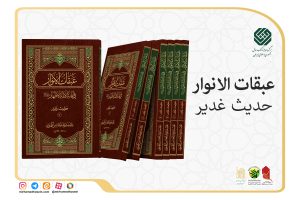
Re-examining “Hadith al-Ghadir” in ʿAbaqāt al-Anwār

Among the textual proofs related to the question of Imamate, Hadith al-Ghadir holds a special position. This hadith, which has been transmitted with the well-known wording, “Whoever I am his mawla, then this ʿAlī is his mawla,” is among the traditions that have received extensive attention from Muslim scholars throughout history. However, a comprehensive and methodical examination of this hadith requires extensive investigation across various sources and a precise analysis of both its chain of transmission and its indication.

Notes

Re-examining “Hadith al-Wilayah” in ʿAbaqāt al-Anwār

The examination of “Hadith al-Wilayah” in ʿAbaqāt al-Anwār is a clear example of Allamah Mīr Ḥāmid Ḥusayn’s scholarly methodology; a methodology in which extensive investigation, precise analysis of chains of transmission, and multilayered analysis of indication are brought together.

Notes

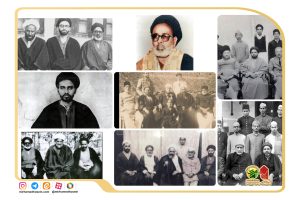
On the occasion of the month of Jamadi Al-Thani and the passing of Allama Saeed Al-Mullah Ubqati, may God have mercy on her.

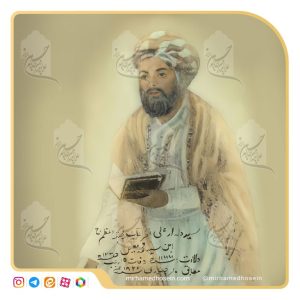
Allamah Sayyid Muhammad Saeed Abqat, known as Saeed al-Mulla (Hafid Saheb Abqat); born on 8 Muharram 1333 AH. In 1351 AH, he went to Najaf Ashraf and attended the lessons of jurisprudence and principles of the great saints: Agha Zia Iraqi, Sayyid Abul Hasan Isfahani, Mirza Hassan Bojnourdi, Sayyid Javad Tabrizi, and Sheikh Abdul Hussein Rashti, and received the degree of ijtihad from them.

Scroll to Top