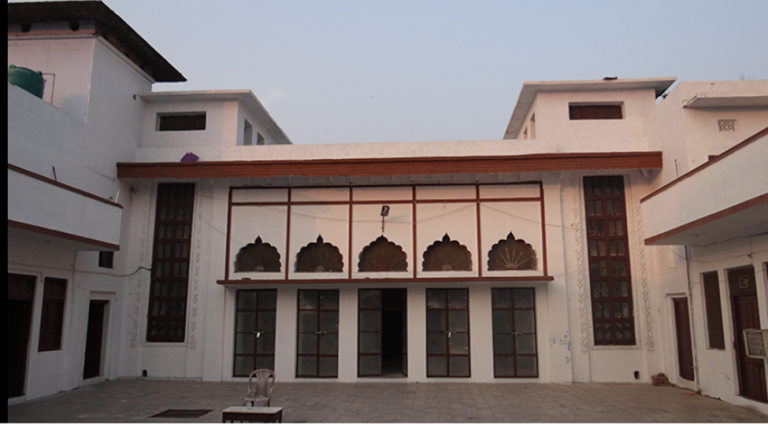
The Nasiriyah Library is today considered one of the rare scientific and religious treasures in the Middle East. This grand library was founded by the eminent scholar Allama Syed Muhammad Quli, who – in addition to authoring numerous works on Islamic culture and knowledge – established this great library for the use of scholars, researchers and academics, and endowed it to his descendants during his lifetime.
After the passing of Allama Muhammad Quli, his worthy son Allama Hamid Husayn continued his father’s work. While compiling, editing and organizing his father’s books, he also expanded the library. For composing his great Shia encyclopedia “Abaqat al-Anwar”, he needed reference materials that were not easily available in India.
Allama Hamid Husayn traveled with his brother Maulana Ijaz Husayn, author of “Kashf al-Hujub wal-Astar”, to most Islamic countries to acquire the needed books, purchasing hundreds of volumes to develop this scholarly repository. In addition to his frequent travels, he would obtain required books through friends. The collection of letters he wrote to scholars in other countries about acquiring Islamic books demonstrates this great man’s passion and dedication.
He strove to obtain original manuscripts whenever possible, and when unavailable, would send copyists to locations where the books were kept. Hujjat al-Islam Muhammad Saeed Nakhlah writes about Allama Nasir Husayn’s efforts to acquire the book “Al-Radd alal-Muta’assib al-Anid” – after learning a copy existed in an Egyptian library, Allama Hamid Husayn wrote to Hajj Mirza Husayn Noori (author of Mustadrak al-Wasa’il) and after about twenty years finally obtained a copy of this two-volume work.
After Allama Hamid Husayn’s passing, custodianship of the library transferred to his son Maulana Nasir Husayn, titled “Nasir al-Millah”. During his tenure, the library flourished further with significant renovations. A large building was endowed by a believer and the collection was moved to its current location, now famous as the Nasiriyah Library, named after him.
The library contains over 30,000 books, including about 5,000 manuscripts, most of which are rare and unique copies.
Source: International Center for Microfilm Noor – India