
In the name of Allah, the Most Gracious, the Most Merciful
On the occasion of the month of Jamadi al-Thani and the death of Allamah Saeed al-Mulla Abqat (may Allah have mercy on him)
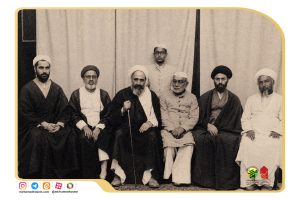
Allamah Sayyid Muhammad Saeed al-Mulla (the grandson of Abqat); born on 8 Muharram 1333 AH. In 1351 AH, he went to Najaf Ashraf and attended the lessons of jurisprudence and principles of the great saints: Agha Zia Iraqi, Sayyid Abul-Hasan Isfahani, Mirza Hassan Bojnourdi, Sayyid Jawad Tabrizi and Sheikh Abdul-Hussein Rashti and received the degree of ijtihad from them.
In 1356 AH. He returned to his hometown and devoted himself to writing, teaching and socio-cultural activities, especially enriching his unique family library, the Nasiriyah Library.
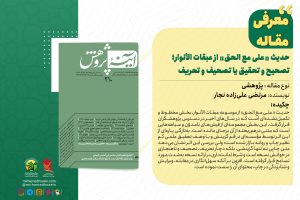
He is the author of valuable works such as: The Twelver Imam (peace be upon him), The Supporters of the Imams (/Al-Asma) (peace be upon them), The True Faith Under the Light of the Holy Quran, The Ascension of Eloquence – a collection of sermons of the Holy Prophet (peace be upon him and his family), The City of Knowledge, The Verse of Purification, The Verse of Wilayat and the compilation of parts of the Abqat Al-Anwar such as the Hadith of Manasiba and the Hadith of Khaybar, and the author of other works.
Finally, on the 11th of Jumada Al-Thani 1387 AH in Lucknow, when he had not passed more than 55 years of his noble life, he bid farewell to the mortal world and hastened to meet God.
After a magnificent funeral, his body was transferred to Agra and buried next to his venerable father, Allama Nasir Hussain, in the courtyard of the shrine of Qadi Noorullah Shushtari – the third martyr – may God have mercy on him.
It is worth mentioning that the late Saeed al-Mullah introduces the works of the Abqat family at the end of some of his manuscripts. In some of the notes written in pencil, he introduces the works of:
Allamah Mufti Sayyid Muhammad Quli (father of the owner of the Abqat / 1188 – 9 Muharram al-Haram 1260 AH), Allamah Sayyid Ijaz Hussain (brother of the owner of the Abqat / 21 Rajab al-Murjab 1240 – 1286 AH), Allamah Mir Hamid Hussain (owner of the Abqat / 5 Muharram al-Haram 1246 – 18 Safar al-Muzaffar 1306 AH), Allamah Nasir al-Mullah (son of the owner of the Abqat / 19 Jumada al-Thaniyyah 1284 – 1 Rajab al-Murjab 1361 AH).
In the name of the Almighty
The works of Mufti Sayyid Muhammad Quli in 1260:
The rulings of the Alawite judiciary in the rulings of the judiciary and issuing of fatwas
Tashyid al-Mut’an, reply to the eighth chapter, 2 volumes
Saif al-Nasiri, answer to the first chapter of the book
Taqleeb al-Maka’id, reply to the second chapter of the book
Burhan al-Sa’adat, reply to the seventh chapter of the book
Mas’are al-Afham, chapter 11 of the book
Taqreeb al-Afham in the interpretation of verses and rulings
Nifaq al-Shaykhin
Tafhir al-Mu’minin
Fakhir al-Fakhirab (The Noble Answers)
Knowing hypocrisy
Reply to the fourth chapter
Completing the Balance
The works of Mawlāwī Ijaz Husain, deceased in 1286
Shadūr al-‘Aqīyān in the translation of the A’yān
Knowing the veil and the veil
Mawlāwī Jan Muhammad Lahori’s debate treatise
Treshold in the cases of Mirza Muhammad Kamil, Sahib al-Dahlawī
Al-Qawl al-Sūdīd fi radd al-Rashīd
The works of Sayyid Hamid Husain Tab Throat
Fatuhat Haidariyyah, which is for Sahib Al-Sayyid, Sahih Sahib Al-Abaqat
Risalah Taqiyyah, which is for Sahib al-Sayyid, Saheeh Sahib al-Abaqat
Istaksa Al-Fahham, two thick volumes
Abqat al-Anwar, 30 thick volumes
Shuwarq al-Nusus, 5 volumes
Discovering problems in solving problems
Al-Najm al-Thaqib in the matter of al-Hajib, jurisprudence
Al-Azb al-Battar in the topic of Ayat al-Ghar
Ifham Ahl al-Min in rejecting the ouster of Al-Ghin
Zain al-Wasil in researching issues, multiple volumes, fatwas
The sources in Sharah al-Sharia, in Fiqh, are incomplete
Isfar al-Anwar on the events of the best of Asfar
The works of Naser-ul-Molla Tab-Thorah, year 1361
Nafahat al-Azhar
Proof of the rejection of the Sun by Ali [peace be upon him]
Fadael, Khyber
Masnad of Fatima bint al-Hussein [peace be upon him]
The book of al-Mafrid F Obligation of surah
Esbagh Al-Nael in researching the issues
Diwan al-Qasa’ed
Diwan al-Khattab
Sermons
Sermon on Friday and Eid
Al-Ithmaar al-Shahiyyah in Al-Manshihat al-Arabiyyah
The book of composition, Farsi
Mehdi Esfandiari