Message of Ayatollah al-Uzma Mazaheri to the scholarly meeting of re-recognition and honoring of Allama Mir Hamid Husain Hindi
Researchers of Shi’i theology must rely on the continuation of Allama Mir Hamid Husain’s methodology in his great works
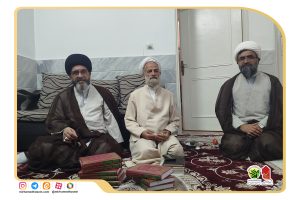
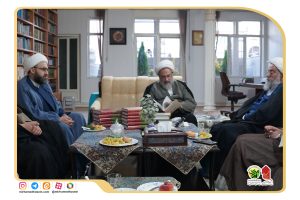
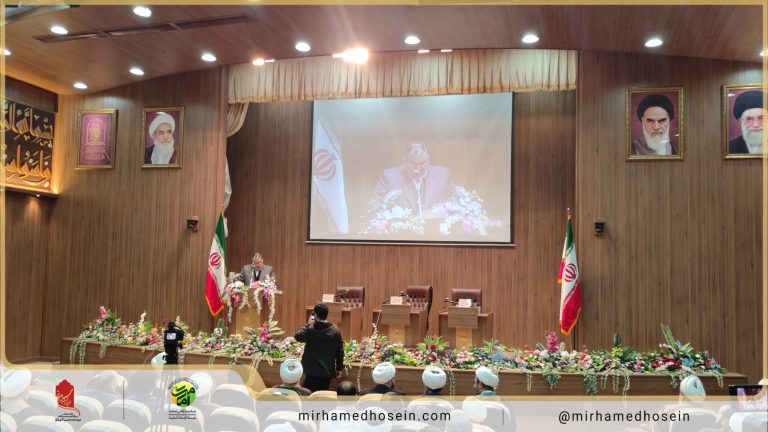
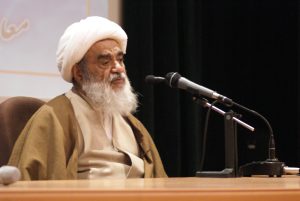
Ayatollah al-Uzma Hussein Mazaheri, in a message to the scholarly meeting of re-recognition and honoring of Allama Mir Hamid Husain Hindi, which was held through the efforts of the Isfahan Seminary Higher Education Institute, stated: the peerless role of the pious and striving scholar (حضرة Allama Mir Hamid Husain Hindi “قدّس سرّه الشريف”) in elevating and strengthening the culture of Shi’ism, and his tireless struggle in defending and preserving the exalted school of the Ahl al-Bayt of infallibility and purity “peace be upon them,” and in establishing the doctrinal and theological beliefs of the Shi’a school, is acknowledged by all scholars and بزرگان.
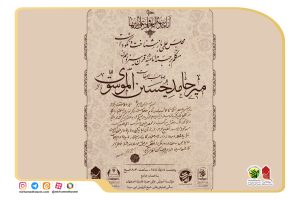
This religious authority stated: we thank God Almighty that, in the noble Rajab days, the scholarly session of re-recognition and honoring of the great guardian of the precinct of Shi’ism, the diligent hadith scholar, the profound theologian, the pride of the Imamiyya Shi’a and the pillar of the true law, حضرة Allama Mir Hamid Husain Musawi Nishaburi Hindi “قدّس سرّه الشريف,” is being held in the Isfahan seminary.
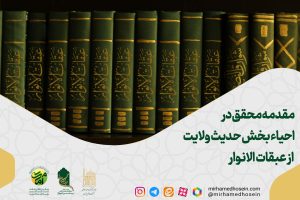
His Eminence stated: the peerless role of this pious and striving scholar in elevating and strengthening the culture of Shi’ism, and his tireless struggle in defending and preserving the exalted school of the Ahl al-Bayt of infallibility and purity “peace be upon them,” and in establishing the doctrinal and theological beliefs of the Shi’a school, especially the life-giving teachings of Imamate and Wilayah, particularly through the compilation of the brilliant and immensely valuable encyclopedia “Abqat al-Anwar fi Manaqib al-A’immah al-Athar,” reached such a level that the great comprehensive jurist of Shi’ism, Mirza-ye Bozorg Shirazi “may God’s pleasure be upon him,” bowed in reverence in praise of the scientific and theological services of that outstanding Imamite theologian and stated: “In انصاف, it can be said that until now, in Islam, in the science of theology, books have not been compiled in such a beneficial and complete manner, especially the book Abqat al-Abrar, which is among the good deeds of this age and the spoils of this time.” Our great and revered teacher, the great Imam of blessed memory “قدّس الله روحه,” who himself is from the noble lineage of Allama Mir Hamid Husain, was also, from his youth, following the printing and publication of this great encyclopedia, and some parts of it were published at that time through his efforts and those of others, and he always emphasized: “Shi’a scholars in particular, and other classes as well, must not let this great book, which is the greatest proof of the school, disappear, and they must take action to print it.”
The head of the Isfahan Seminary continued: now we thank the Almighty God that, by the blessing of the Islamic Revolution and the struggle of the beloved Imam and the great martyrs, the ground for the research and publication of this excellent work and the other valuable works of Allama Mir Hamid Husain “may God exalt his word” has been فراهم through the efforts of a group of professors and scholars of the seminaries, and for this reason all of them must be sincerely appreciated and thanked. May God the Exalted reward them with the best reward, the fullest reward, and the greatest reward.
His Eminence emphasized: it is necessary in this short occasion, and in a state of illness and indisposition, to emphasize and rely on two brief but important points:
First: the life-building and society-shaping teachings of Imamate are lofty and radiant, and at the same time oppressed. The subject of Imamate, which is the core and essence of the Shi’a school, and in the lofty statement of the Eighth Imam “the best blessings of those who pray”: “Indeed, Imamate is the foundation of the growing Islam and its lofty branch,” must more than before become the object of attention, deep study, and research in the seminaries, and its aspects must be clarified for everyone, especially for the truth-seeking youth generation, and we must know that the continuation of the survival and life of Shi’ism depends on these elevated teachings, and if proper attention is not given to these teachings, the Shi’a school will certainly be harmed.
Second: the methodology of Allama Mir Hamid Husain “may his noble station be exalted” in his great works, especially the brilliant encyclopedia Abqat, is a matter that must undoubtedly be examined and scrutinized, and researchers and scholars of Shi’i theology must correctly identify that method and approach and rely on its continuation, and benefit from its advantages and benefits.
I sincerely thank and appreciate all the officials and organizers of this meeting, as well as the international congress of Allama Mir Hamid Husain “قدّس سرّه,” which will be held later, especially the guardians and members of the International Imamate Foundation, particularly the honorable Hujjat al-Islam wal-Muslimin Dr. Subhani “may his honor endure” and his respected colleagues, and also the officials of the Isfahan Seminary Higher Education Institute, especially the honorable Hujjat al-Islam wal-Muslimin Dr. Hadi-zadeh “may their confirmations endure,” and I ask God the Exalted for the elevation of the word of truth and the exaltation of the teachings of the Shi’a school, and for the support and success of all in this luminous path.