
In the Name of Allah, the Most Merciful, the Compassionate.
Praise be to Allah, Lord of the worlds, and blessings and peace be upon our master Muḥammad and his pure progeny, and curse be upon all their enemies.
A Brief Survey of the Ḥadīth of Ghadīr in ʿAbaqāt al‑Anwār
Despite the many discussions surrounding the Ḥadīth of Ghadīr throughout history, before the writing of ʿAbaqāt al‑Anwār one cannot find a work that has addressed all aspects of this ḥadīth in detail and responded to the various objections of the Sunnīs regarding its chain (isnād) and implication (dalāla). Indeed, the efforts of ʿAllāma Mīr Ḥāmid Ḥusayn al‑Hindī were not limited to responding to the objections of ʿAbd al‑ʿAzīz al‑Dehlawī; rather, by tracing the roots of the doubts, he used Dehlawī’s statements as a basis for presenting and critiquing the statements of earlier Sunnī scholars, leaving behind a comprehensive and solid work. May Allah have mercy upon him and grant him a good abode.
In the section on the chain of the ḥadīth, he established the tawātur and the abundance of the chains of transmission of the ḥadīth. He accomplished this through two methods:
First: the statements of Sunnī scholars acknowledging the tawātur or the multiplicity of the routes of the ḥadīth, among whom prominent figures appear such as Shams al‑Dīn al‑Dhahabī, Ibn Ḥajar al‑ʿAsqalānī, Shams al‑Dīn al‑Jazarī, Jalāl al‑Dīn al‑Suyūṭī, and others.
Second: listing the independent works of accepted Sunnī scholars written for collecting the chains of the Ḥadīth of Ghadīr. The books of Ibn ʿUqdah, Ibn Jarīr al‑Ṭabarī, al‑Ḥākim al‑Ḥaskānī, Abū Masʿūd al‑Sijistānī, Shams al‑Dīn al‑Dhahabī, and others belong to this category.
Within each of these discussions, the attribution of statements to the scholars, the correctness of attributing those writings to their authors, and the degree of acceptance of their scholarly standing have been examined in detail.
Following the discussion of the chain of the ḥadīth, the examination of objections raised by opponents concerning the authenticity and originality of the ḥadīth is pursued. The objections raised regarding the reliability of the ḥadīth are general in nature, and the objectors have not engaged directly with its chains. The axes of these doubts are: the absence of the ḥadīth in the Ṣaḥīḥayn and other Sunnī canonical collections, the lack of transmission by trustworthy narrators and major authorities, the criticism of a few early Sunnī figures regarding the soundness of the ḥadīth, and its alleged incompatibility with history. Some have also accepted the ḥadīth itself but considered its tawātur impossible to establish.
In response to each of these objections, the ʿAllāma employed various methods in detail and filled the gap left by earlier efforts, to the extent that the response to al‑Jāḥiẓ’s criticism of the Ḥadīth of Ghadīr alone occupies nearly the volume of a thick book.
With all this, the main reliance of the Sunnīs in criticizing this ḥadīth has been its implication (dalāla). They have regarded the word “mawlā” as alien to the meaning “awlā bi‑taṣarruf” (one who has priority/authority of disposal) and the concept of governance, to the extent that they have overlooked the numerous indications of this meaning in their own works.
The logical sequence for proving the implication of the ḥadīth in favor of imamate is as follows:
First, the word “mawlā” must undergo semantic analysis, and its capacity to convey the meaning of imamate or a meaning close to it must be established.
Next, it must be clarified that “mawlā,” in the context of the Ḥadīth of Ghadīr, cannot bear any meaning other than imamate.
ʿAllāma Mīr Ḥāmid, through precise semantic analysis based on multiple methods, has demonstrated convincingly that the meaning “priority in authority/disposal” (awlawiyya fī al‑taṣarruf) is among the original and genuine meanings of the word “mawlā,” and that the repeated denials of the opponents lack firm foundation.
Beyond this, various internal and external evidences indicate that only this meaning was intended in the text of the ḥadīth.
Clues such as:
- the descent of verses related to the event of Ghadīr,
- the contextual flow of the ḥadīth,
- the understanding of the Companions and contemporaries of the event,
- the different textual versions of the ḥadīth,
- identifying the meaning of “mawlā” in other non‑Ghadīr ḥadīths,
- the understanding of Sunnī scholars, etc.,
all establish firmly the correctness of the Shīʿī interpretation of the Ḥadīth of Ghadīr.
It goes without saying that ʿAllāma Mīr Ḥāmid Ḥusayn did not suffice, in any step, with giving a brief report or overlooking the Sunnī objections to that minor point. Rather, every objection raised about any of these evidences—indeed, even possible or anticipated objections—has been addressed.
For example, the descent of the verse: “سَأَلَ سَائِلٌ بِعَذَابٍ وَاقِعٍ” in the event of Ghadīr is only one of the numerous verses related to the implication of the ḥadīth for imamate, and all these verses together constitute only a small portion of the total evidences showing that the ḥadīth implies imamate.
Therefore, even if Shīʿa were deprived of using this verse as argument, no harm would come to the semantic proof of the Ḥadīth of Ghadīr. Nevertheless, Mīr Ḥāmid Ḥusayn has narrated the most important objections raised by Ibn Taymiyya concerning the relation of this verse to Ghadīr, and has responded to them.
Moreover, the meaning “priority in authority/disposal (awlā bi‑taṣarruf)” is one of the meanings of “mawlā” and is equivalent to imamate.
And even if the Sunnī scholars—for any reason—do not consider this meaning among the primary meanings of “mawlā,” other meanings such as walī (guardian), sayyid (master), mutaṣarrif (one who has authority), and mutawallī (one in charge) can be established for “mawlā” based on the statements of numerous Sunnī sources.
The significant point here is that proving these meanings in Mīr Ḥāmid Ḥusayn’s research is not restricted to works of a single discipline, such as lexicography. Rather, a wide range of tafsīr, ḥadīth, and other sources support these meanings.
Footnote:
- Sūrat al‑Maʿārij, verse 1.
In the next step, the Sunni scholars, while accepting the meaning “priority in authority/disposal (awlā bi‑taṣarruf)” for the root of the word “mawlā,” have claimed that, from what appears in the Ḥadīth of Ghadīr, the meaning of priority in authority and imamate cannot be derived for multiple reasons. In their view, the utmost virtue that can be established for the Commander of the Faithful, peace be upon him, from the ḥadīth is the obligation of loving him, which bears no connection to worthiness for imamate. Among the evidences upon which they have relied to prove the exclusivity of the meaning of love are: the final clause of the ḥadīth, the understanding of the Ahl al‑Bayt, peace be upon them, of the ḥadīth, and the occasion of its issuance (shaʾn al‑ṣudūr).
Some others, outside these frameworks, within the structure of their Sufi‑Sunni thought, have considered the ḥadīth to pertain to an inner and mystical (Ṣūfī) walāya which bears no necessary correlation with outward imamate; and through this interpretation they have preserved the position of the three caliphs in their place.
Amid the twists and turns of all these challenges and the search for diverse ways of escaping them, ʿAbaqāt al‑Anwār has become an unparalleled encyclopedic work. Yet this brief account that has passed concerning the labors of this tireless scholar on this ḥadīth stands at a great distance from its objective reality, and its true worth becomes manifest only through direct and deep study of the product of his wondrous pen.
May God reward him with the best reward granted to the truthful strivers, gather him with his pure forefathers—especially our master the Commander of the Faithful—and lodge him in the highest درجات of Paradise with the martyrs and the truthful, by His grace and bounty, for He is the Most Merciful of the merciful.
The Lithographic Prints of ʿAbaqāt
The editing of this work has been arranged on the basis of two lithographic prints of ʿAbaqāt al‑Anwār. The first print, which is complete and older, comprises the entirety of the Ḥadīth of Ghadīr, which according to the author’s division consists of four sections. The second print is later and incomplete, such that it contains approximately one‑fourth of the total of the Ḥadīth of Ghadīr. Below, the features of both prints are introduced in detail.
- First Print
This print consists of two volumes. The first volume, from the beginning up to page 600, was printed at the Majmaʿ al‑Baḥrayn Press in Ludhiana; and from page 601 to the end of the book (page 1251) at the Majmaʿ al‑ʿUlūm Press in Lucknow, in the year 1293 AH, during the lifetime of the author.
The first page of this print contains the Verse of Ikmāl, the name of the book, and the name of the printing house (Image 1).
After this, there appears a preface in four pages with page numbers independent from the pages of the book, which is an addition of the printing house. The first three pages of this preface contain expressions in praise and commendation of Mīr Ḥāmid Ḥusain and Sayyid Muḥammad Ḥasan as follows:
In the Name of Allah, the All‑Beneficent, the All‑Merciful
Praise and grace belong to Allah that in this felicity‑accompanied time, according to the command of His Excellency, the Greatest of the ministers, the Noblest of the amirs, the Grand Ṣadr, the famous qarm, the radiant full moon, the one who by the brightness of his beauty removes the darkness of the obstinate age, the one who by his victory repels into the throat of every stubborn denier, the fresh towering branch from the ʿAlawī tree, and the moist and elegant twig from the Fāṭimid tree, the wise and skilful one and the surpassing jahbadh, the refuge of the great scholars, the supporter of the religion and Islam, the reference of the dignitaries and the helper of the community, the cloud of generosity and pouring bounty, the rain of beneficence and grace that flows abundantly, the order of the state, the community, and the religion, the succour of Islam and the refuge of the believers, the promoter of the firm law, the propagator of the manifest truth, the one who studies the remembrance of the predecessors, the one whose fame of generosity and pride has spread in the horizons, the one toward whom fingers and fingertips are tied in allegiance, the succour of the great and the noble, the support of the eminent and the quintessence of the most honourable, the one referred to when affairs clash, the one resorted to when the multitude differ, the one who has reached from glory and honour to … … such that even Saḥbān, in competing with him, would be struck with bewilderment.
Footnotes:
- The identity of “Sayyid Muḥammad Ḥasan” is not clear, except that according to the preface, the first half of the first volume was printed by his command.
- al‑Qarm: the master. See: al‑Ṣiḥāḥ, 5:2009, “qarm”.
- Zāḥa al‑shayʾu yazīḥu zayḥan: meaning it went far away and departed, and another removed it. Ibid., 1:371, “zayḥ”.
- al‑Darʾ: repelling. Ibid., 1:48, “darʾ”.
- Shayʾ ṭarī: meaning fresh, clearly tender. Ibid., 6:2412, “ṭarā”.
- Rāqanī al‑shayʾu yarūqunī: meaning it pleased me; from it their saying: “ghilmān rūqah and jawārī rūqah,” meaning handsome; it is the plural of rāʾiq. Ibid., 4:1486, “rūq”.
- al‑Jahbadh (with kasrah): the expert critic. al‑Qāmūs al‑Muḥīṭ, 1:489, “jahbadh”.
- al‑Ṭawl (with fatḥah): favor or benefaction. al‑Ṣiḥāḥ, 5:1755, “ṭawl”.
- al‑Haṭl: the continuous falling and flowing of rain and tears; it is said: “the sky poured rain.” Ibid., 5:1850, “haṭl”.
- Hamalat ʿaynuhu tahmul/tahmil hamlan wa hamalānan: meaning his eye overflowed. Ibid., 5:1854, “hamal”.
- al‑Thimāl (with kasrah): succour; it is said: “so‑and‑so is the thimāl of his people,” meaning their helper who manages their affairs. al‑Ṣiḥāḥ, 4:1649, “thamal”.
- Taḍājama al‑amru baynahum: when the matter differed among them. Ibid., 5:1970, “ḍajm”.
- The text in the part “… …” is damaged and illegible.
The one who investigates the obscure subtleties of realities, the one who takes hold of noble virtues with the firmest bonds, the one who leads away the minds of the skilled by the magic of his speech, the offspring of the pure and the nobility of the chosen, the one who brings forth from the rare subtleties of meanings and expressions that over which the envious break the sockets of their arrows, the most magnificent dastūr and the greatest minister, the brightness of the forehead of time, His Excellency Sayyid Muḥammad Ḥasan—may Allah perpetuate the felicity of the age by the permanence of his fortune, and make the radiance of religion everlasting by the light of his exaltation—[under whose command] the first half of the first volume from among the volumes of the second method of the noble book ʿAbaqāt al‑Anwār fī Imāmat al‑Aʾimmah al‑Aṭhār (peace of Allah be upon them throughout the nights and the pre‑dawn hours), the composition of the noble eminent one, the erudite of the age and the investigator of the time, the refuge of the religion, the glory of the believers, the one towering above the banners of sciences and knowledges in their highest forms, the one arriving at the purest springs of spreading the truth and aiding the religion, pure in origins and noble in lineage, before the brilliance of whose perfection the necks of the most eminent experts and the foremost exemplars bow, whose vast learning and singularity are acknowledged by the great scholars of the Ḥijāz and Iraq, whose excellence, criticism, precedence, and uniqueness have been met with concurrence, agreement, and consensus, whose lofty pride, elevated rank, long reach, and vast knowledge are admitted even by the people of discord, let alone the people of accord, the arranger of works that travel like the sun through all horizons, works whose writing ought to be with gold upon the eyelids, not with ink upon papers, the one who undertakes the burdens of supporting the religion in this ungrateful age, the breaker of the back of every doubting deviator, the cutter‑off of the deviation of every hostile envier, the suppressor of the incitement of every malicious hater, the one who advances with the light of Allah when they halt, the clarifier of the path of truth when …
Footnotes:
- Naqqaba ʿan al‑akhbār wa‑ghayrihā: he investigated; it is also said: he informed about them. Lisān al‑ʿArab 1:769 “naqaba”.
- al‑Daʾl: deception; it is said daʾala yadʾalu daʾlan wa daʾlānan. Ibid. 11:233 “daʾl”.
- al‑Ruʿẓ: the place where the arrowhead enters the shaft; its plural is arʿāẓ. Among Arab proverbs: “Indeed so‑and‑so breaks the arrow‑sockets against you,” said about a man whose anger becomes intense. Tahdhīb al‑Lughah 2:177 “ruʿẓ”.
- al‑Dastūr: the register of the community; later it became a title for the grand minister to whom reference is made in matters concerning people, because he is the holder of that register. In al‑Asās: the minister is the dastūr. Tāj al‑ʿArūs 6:402.
- Faraʿa al‑shayʾa yafraʿuhu farʿan wa furūʿan wa tafarraʿahu: he rose above it. Lisān al‑ʿArab 8:247 “faraʿ”.
- Aṣfaqū ʿalā kadhā: they agreed upon it. al‑Ṣiḥāḥ 4:1508 “ṣafaq”.
- Raṣaftu al‑ḥijārah fī al‑bināʾ: I set the stones together in building. al‑Ṣiḥāḥ 4:1365 “raṣf”; raṣṣafa al‑ḥijārah tarṣīfan: like arranging them closely. Tāj al‑ʿArūs 12:232 “raṣf”.
- al‑Tibr: gold before being minted. al‑Ṣiḥāḥ 2:600 “tibr”.
- al‑Ḥibr: that with which one writes (ink). Ibid. 2:619 “ḥibr”.
- Iḍṭalaʿa bi‑al‑ḥaml wa‑al‑amr: his ribs bore the burden. Lisān al‑ʿArab 8:225 “ḍalaʿ”.
- al‑ʿIbʾ (with kasrah): burden or load of anything; plural aʿbāʾ. Ibid. 1:117 “ʿabʾ”.
- Ḥāda ʿan al‑shayʾ wa‑al‑ṭarīq yaḥīdu: he deviated from it… In speech it is also said in condemnation of the world: “it is al‑jaḥūd, al‑kanūd, al‑ḥayūd, al‑mayūd,” a pattern indicating exaggeration. al‑Nihāyah fī Gharīb al‑Ḥadīth wa‑al‑Athar 1:466 “ḥayd”.
- al‑Nazgh: speech that incites people against one another… “The devil stirred between them,” meaning he corrupted and incited… the devil’s nazgh: his whispering and pricking in the heart. Lisān al‑ʿArab 8:454 “nazgh”.
He (referring to Sayyid Muḥammad Ḥasan), whose eminent virtues the travelers have narrated, and by whose beautiful achievements the regions and countries have been adorned, and in the blooming of his excellence and the radiance of his nobility, no two individuals have differed. He, from whose overwhelming and silencing scrutiny the hearts of the deviating, wicked doubters trembled, and from whose decisive and complete retribution the pillars of the deceptive, wicked instigators crumbled. And the groups of thieves cowered in corners of hiding and concealment from the brilliance of his texts, and the assembly of disputers retreated from the contest of his sharp, decisive sword, choosing flight. The regions became fragrant with the sweet scents of his erudite transmissions, and the lands were perfumed by the breezes of his abundant bestowals. The surroundings and quarters were illuminated and became brightened by the radiance of his piercing star, and the universes and eras were lit and shone by the splendor of his sound opinion. He is the remover of veils from the faces of secrets, the explainer of the intricacies of difficult matters where thoughts became lost and the great ones were bewildered. The investigator and critic of narrations and reports, the reviver of the pure ones’ traditions in these ages. He astounds minds and intellects with the breadth of his knowledge, he unravels the knotty, complex problems from the Sunnah and the Book. He defends the honor of his ancestors, the Household of the Prophet, the best of humankind. The renewer of the true path at the head of the thirteenth century. The dispeller of the darkness of doubt from the landmarks, the vanquisher of innovations, who is not swayed by the blame of any blamer in the way of God, the paramount leader of his time.
Footnotes Translation:
- Tazayyana (تَزَيَّنَ) and Izdāna (ازْدانَ) mean the same thing, and it is an ift’ala form from zīnah (beauty). See al-Zīn (الزِين) 13:201.
- Bazaghat al-shamsu tabzuġu bazġan wa buzūġan: The sun emerged, it emerges, with bazġan and buzūġan; meaning it appeared or it rose and shone. See ibid. 8:418 “Bazag”.
- Al-zaʿzaʿah: Shaking something. Zaʿzaʿahu zaʿzaʿatan fa-tazaʿzaʿa: He shook it to uproot it. See ibid. 8:141 “Za’a”.
- Al-ḍaʿḍaʿah: Submissiveness and humility. And ḍaʿḍaʿahu al-amru fa-taḍaʿḍaʿa (the matter humbled him and he became humbled). See ibid. 8:224 “Ḍa’a”.
- This phrase refers to the book “Istiqṣāʾ al-Ifḥām wa-Istīfāʾ al-Intiqām” (Exhaustive Scrutiny of Silencing and Complete Retribution) by the author.
- Al-qubūʿ: To put one’s head into one’s shirt or garment. Qabaʿtu aqbaʿu, Abu Zayd, likewise taqabbaʿtu. Al-Muḫaṣṣaṣ 1:401.
- Al-zarāfah (with fatḥah): A group of people. See ibid. 4:1369 “Zaraf”.
- This refers to another work by the author, “Shawāriq al-Nuṣūṣ fī Takdhīb Fadhāʾil al-Luṣūṣ” (Brilliant Texts in Refutation of the Virtues of Thieves).
- Al-nukūṣ: Holding back from something. And it is said: Nakasa ʿalā ʿaqibayhi yankuṣu wa yankiṣu, meaning: he turned back on his heels. See ibid. 3:1060 “Nakṣ”.
- Falānun yubārī falānan: Meaning he competes with him and does the same as him. See ibid. 6:280 “Barī”.
- This refers to another work by the author: “Al-ʿAḍb al-Bāttār fī Naqḍ al-Tamassuk bi-Āyat al-Ghār” (The Decisive Sword in Refuting Reliance on the Verse of the Cave).
- Al-araju wa al-arīju: The spreading of the fragrance of musk. You say: arrija al-ṭību (with kasrah) ya’riju arj an wa arījan, meaning its scent spread. See ibid. 1:298 “Arj”.
- Ḍāʿa al-misk wa taḍawwaʿa wa taḍayyaʿa: Meaning the musk moved and its scent spread. See ibid. 3:1252 “Ḍawʿ”.
- This refers to another work by the author: “Al-Najm al-Thāqib fī Masʾalat al-Ḥājib” (The Piercing Star in the Issue of the Intermediary).
- This refers to another work by the author: “Kashf al-Muʿḍilāt fī Ḥall al-Muškilāt” (Unveiling Complexities in Resolving Problems).
- Tāha fī al-arḍ: Meaning he went lost in the land, bewildered. See ibid. 6:2229 “Tīh”.
- Al-sabr: Experimentation. And sabara al-shay’a sabran: He estimated and examined the thing. Lisān al-ʿArab 4:340 “Sabr”.
- Al-gayhab: Darkness, and the plural is al-gayāhib. Al-Ṣiḥāḥ 1:196 “Ghab”.
- Al-qarīʿ: The chief. It is said: Falānun qarīʿu dahrhi (So-and-so is the paramount leader of his age). See ibid. 3:1263 “Qaraʿ”.
He is the one who is unique in his age and the peerless of his time, the one possessing the royal (lofty) qualities, the one distinguished with the noble and pure soul, the follower of the traces of his purified ancestors, the one adorned with every glory and beauty — our master and our lord and the lord of all, the eminent Sayyid Ḥāmid Ḥusayn — may the world remain radiant with his existence, and its people drawing from the lights of his grace, and (because of him) goodness became impressed. It is completed.
After these four pages, on the first page, the verse of completion, the name of the book, the name of the author, the name of the printing house, and the year of printing are written with these expressions (Image 2):
“Today I have perfected for you your religion, and completed My blessing upon you, and have approved for you Islam as religion.”
Praise and gratitude belong to God, that the first half of the first volume of the volumes of the Second Method of the book ʿAbaqāt al-Anwār fī Imāmat al-Aʾimmah al-Aṭhār, authored by the exalted master, the cave of faith and Islam, the refuge of jurists and theologians, the ocean of knowledge, the learned scholar, the perceptive expert, the honor of the noble researchers, the chief of the great theosophers, the support of the generous investigators, the defender of his pure ancestors (peace be upon them), the critic of narrations and reports, the promoter of the truths of traditions in these ages, the one carrying the burdens of sciences, the one standing for the aid of the noble religion, the one who astonishes minds and intellects with the vastness of his knowledge, the one who uncovers the difficult problems of the Sunnah and the Book — our master and the master of both worlds, the master Sayyid Ḥāmid Ḥusayn — may the suns of his guidances always rise and the moons of his teachings always shine — was printed in the printing house “Majmaʿ al-Baḥrayn” in Ludhiana, in the year 1293 Hijri.
On the final page, a marginal note with this expression appears (Image 3):
Praise belongs to God that this volume of the volumes of the noble book ʿAbaqāt al-Anwār, from page 601, was printed in the printing house “Majmaʿ al-ʿUlūm” Lucknow, through the effort of Sayyid Sakhāwat Ḥusayn Ṣāḥib Ithnāʿasharī, in the year 1293 Hijri.
The size of the copy is 18 × 27 centimeters. All four sides of the pages are lined and contain the text. Each page has 19 lines. The page numbers of this edition are placed at the top and in the middle, and on each page, on both sides of the number, there are two running titles: on the right running title is “First ḥadīth — Ḥadīth of Ghadīr,” and on the left running title, a title related to the discussion is written. From page 234 onward, in addition to the two running titles mentioned, on the left of the front page and the right of the back page, one of these titles also appears: “Reply to the phrase of Nihāyat al-ʿUqūl of Rāzī,” “Reply to the phrase of Rāzī,” “Reply to Rāzī’s objection in the Ḥadīth of Ghadīr.”
Footnotes:
- Abā fulānun yaʾbā — both with fatḥah — meaning: he refused… thus he is āb, abiyy, and abiyān. Lisān al-ʿArab 14:4 “Abā”.
- It is written thus; the correct form is “maṭbaʿ”.
From page 601 to the end of the book, in addition to the two running titles that appear on both sides of the page number and the phrase in the corner of the page, a running title is also placed above the page number. That is, from this point onward, each page has four titles. (Image 4)
The second volume consists of two sections. Both sections have been bound separately and consequently have their own independent page numbering.
The first section was printed at the press “Maṭlaʿ Nūr” in Lucknow in the year 1294 Hijri. The opening page contains the Verse of Completion, the name of the book, the name of the author, the name of the press, and the year of printing with these expressions (Image 5):
“Today I have perfected for you your religion, and completed My blessing upon you, and approved for you Islam as religion.”
Praise and gratitude belong to God that in this time of blessed conjunction, the second volume of the Ḥadīth of Ghadīr from the volumes of the noble book ʿAbaqāt al-Anwār fī Imāmat al-Aʾimmah al-Aṭhār, peace of God be upon them at all times of night and ends of day — authored by the ocean overflowing with wisdoms and secrets, the promoter of the traces of the Pure Imams, the uncoverer of difficult complexities, the clarifier of abstruse problems, the resort of the people of right guidance, the reference of the possessors of correctness, the refuge of Islam and Muslims, the supporter of the religion, the defender of the path of his pure forefathers, the one bearing the burdens of the sciences of the infallible Imams, the honor of the theologians, the exemplar of the theosophers, the eminent scholar, the noble master, Sayyid Ḥāmid Ḥusayn — may the suns of his teachings continue to shine and the moons of his sciences continue to rise — was printed in the press “Maṭlaʿ Nūr” of Lucknow in the year 1294 Hijri.
The size of this copy is 23 × 32 centimeters. The pages of this edition are also lined and contain 21 lines. The page numbers in this volume are likewise placed at the top and in the middle of the page, and two running titles are written on both sides of it. In addition, on some pages there is a title on the left of the front side of the leaf and on the right of the back side of the leaf.
On the final page (609), this expression appears (Image 6):
Praise and gratitude belong to God that the third portion of the four portions of the volume of the Ḥadīth of Ghadīr from the noble book ʿAbaqāt al-Anwār fī Imāmat al-Aʾimmah al-Aṭhār was completed at the press “Maṭlaʿ Nūr” located [in] Lucknow, at the end of the blessed month of Ramaḍān in the year 1296 Hijri, and the fourth portion will follow — God, the Exalted, willing.
The second section of the second part of the Ḥadīth of Ghadīr begins with “The Sixth Proof among the proofs of the indication of the Ḥadīth of Ghadīr for Imamate” and consists of 399 pages. Although it is likely that this section was also printed by the same press as the previous section, nevertheless no name or mention of it appears in the present copy.
The size of this copy is 23 × 32 centimeters. The pages of this edition are also ruled and contain 21 lines. In this section, the page numbers are placed at the side of the page and in its middle. The top of the page contains one, two, or three running titles.
At the end of this section, several indexes appear with the following titles:
- “Index of Biographies of the First Half of the Second Part of the Ḥadīth of Ghadīr from the book ʿAbaqāt al-Anwār”
- “Index of Marginal Notes”
- “Index of Benefits of the First Half of the Second Part of the Ḥadīth of Ghadīr from the book ʿAbaqāt al-Anwār”
- “Index of Benefits of the Second Half of the Second Part of the Ḥadīth of Ghadīr from the book ʿAbaqāt al-Anwār”
- “Index of Biographies of the Second Half of the Second Part of the Ḥadīth of Ghadīr”
With these descriptions, this edition of the Ḥadīth of Ghadīr of ʿAbaqāt, which is both complete and older, was printed in four sections (or portions):
- The first section (first portion): from the beginning to page 600, which is included in the first volume printed at the press “Majmaʿ al‑Baḥrayn”.
- The second section (second portion): from page 601 to the end of the first volume, printed at the press “Majmaʿ al‑ʿUlūm”.
- The third section: from the beginning of the second volume up to the end of “The Fifth Proof among the proofs of the indication of the Ḥadīth of Ghadīr for Imamate”, printed at the press “Maṭlaʿ Nūr”.
- The fourth and final section: from the beginning of “The Sixth Proof among the proofs of the indication of the Ḥadīth of Ghadīr for Imamate” to the end of the book.
- Second Edition
This edition, which is later than the previous one, was printed at the press “Niẓāmī Press” in Lucknow in the year 1941 CE, corresponding to approximately 1360 AH, after the death of the author.
The year of printing appears on the final page in an Urdu phrase as “1941 CE”, whose translation is as follows:
“It was printed under the supervision of Muḥammad Jawād at Niẓāmī Press, Lucknow, in the year 1941.”
(Image 7)
However, at the beginning of this edition there is a preface by Sayyid Kāmil Ḥusayn dated 1 December 1940 CE.
On the opening leaf of this print, the Verse of Completion (Āyat al‑Ikmāl), the title of the book, a lofty eulogy of the author, and the name of the press appear in the following phrases (Image 8):
(((Today I have perfected for you your religion, and completed My blessing upon you, and approved for you Islam as religion.)))
Praise belongs to God for the continuity of blessings and the abundance of favors, and peace and greetings upon the best of Messengers and Prophets and his pure and chosen Household.
Now then, this is the first part of the volume of al‑Ghadīr,
the book ʿAbaqāt al‑Anwār fī Imāmat al‑Aʾimmah al‑Aṭhār —
Ḥadīth of Ghadīr
First Section (Ḥiṣṣah Ūlā)
It is among the greatest compositions of the Proof of Islam, the Refuge of People, the Fortress of Religion and Honor of Believers, the one who silences the boastful, strangles the pretentious, exceeds all flags of sciences and knowledge, and draws from the pure springs of truth’s propagation and religion’s assistance; about his peerless uniqueness agreement and unanimity and concurrence have been reached; before the radiance of his perfection the necks of eminent masters and foremost scholars bow; he strikes the heads of those possessing opposition and schism, uproots the statures of the misguided and the hypocritical; he ties the knots of the pure religion with his luminous and radiant speech, strengthens its bright foundations with his clear and resplendent words, vanquishes the armies of falsehood with flashes of his cutting swords, disperses the troops of delusion with the gleams of his piercing spears, raises the foundation of religion and upholds its pillars, kindles its flame and sparks its light, comprehends the divine secrets and aspires toward celestial illuminations — the Sign of God among the worlds and His Proof over the deniers, the reviver of the sciences of his chosen forefathers, the noble master, our lord, Sayyid Ḥāmid Ḥusayn — may God elevate his rank in the paradises of heaven and grant him the highest chambers in the gardens of approval.
In accordance with the wish of His Excellency Nawābzādah Colonel Ḥājj Sayyid Jaʿfar ʿAlī Khān Ṣāḥib Bahādur, son of His Highness Nawāb Sir Sayyid Ḥāmid ʿAlī Khān Bahādur (the heavenly resident of the State of Rāmpur), this work was printed at the press named Niẓāmī Press in Lucknow.
On the second leaf, a text in the Urdu language appears, whose translated meaning is as follows (Image 9):
Introduction and Apology!
Today, after nearly ten years, a portion of the Ḥadīth of Ghadīr from the book ʿAbaqāt al‑Anwār is presented to you. All the expenses of printing this book were undertaken by Nawāb of Rāmpur, Colonel Ḥājj Sayyid Jaʿfar ʿAlī, worthy son of His late Excellency Nawāb Sir Sayyid Ḥāmid ʿAlī Khān Ṣāḥib, may God exalt his station. This is a sign of his abundant love in the path of spreading the teachings of the Shīʿah faith.
This book was being printed under the supervision of the noble brother Mawlānā Sayyid Zafar‑Mahdī, but his prolonged illness, the negligence of some of the printing‑house workers, and other difficulties delayed the printing of this work, and only the initial portion of the book was adorned with publication.
It was appropriate that a detailed introduction regarding the mentioned ḥadīth and its compilation be written, but the illness of the dear brother Mawlānā Zafar‑Mahdī and other limitations prevented this. Under these circumstances, it seemed that the best and most suitable course was to publish the portion of the book that had already been printed, so that the world of Islam and Shīʿism might benefit even more from this work.
Sayyid Kāmel‑Ḥusayn – may God grant him goodness
1 December 1940 CE
It is worth mentioning that the script of this print is more beautiful than that of the previous edition (Image 10).
The size of this copy is 17 × 25 centimeters, and its pages are also ruled and contain 18 lines. The number of pages in this edition is 539, which covers up to #. In this print, page numbers are placed at the bottom of the page. At the top of the page, there are two running titles: on the right in every page appears “First Volume of the Ḥadīth of Ghadīr”, and on the left appears a title related to the discussion.
From page 235 onward, on the left of the recto and the right of the verso of the leaf, one of these two titles also appears:
- “Reply to the passage of Nihāyat al‑ʿUqūl of Rāzī”
- “Reply to Rāzī’s Criticism in the Ḥadīth of Ghadīr”
On the second leaf, a text in the Urdu language appears, whose translated meaning is as follows (Image 9):
Introduction and Apology!
Today, after nearly ten years, a portion of the Ḥadīth of Ghadīr from the book ʿAbaqāt al‑Anwār is presented to you. All the expenses of printing this book were undertaken by Nawāb of Rāmpur, Colonel Ḥājj Sayyid Jaʿfar ʿAlī, worthy son of His late Excellency Nawāb Sir Sayyid Ḥāmid ʿAlī Khān Ṣāḥib, may God exalt his station. This is a sign of his abundant love in the path of spreading the teachings of the Shīʿah faith.
This book was being printed under the supervision of the noble brother Mawlānā Sayyid Zafar‑Mahdī, but his prolonged illness, the negligence of some of the printing‑house workers, and other difficulties delayed the printing of this work, and only the initial portion of the book was adorned with publication.
It was appropriate that a detailed introduction regarding the mentioned ḥadīth and its compilation be written, but the illness of the dear brother Mawlānā Zafar‑Mahdī and other limitations prevented this. Under these circumstances, it seemed that the best and most suitable course was to publish the portion of the book that had already been printed, so that the world of Islam and Shīʿism might benefit even more from this work.
Sayyid Kāmel‑Ḥusayn – may God grant him goodness
1 December 1940 CE
It is worth mentioning that the script of this print is more beautiful than that of the previous edition (Image 10).
The size of this copy is 17 × 25 centimeters, and its pages are also ruled and contain 18 lines. The number of pages in this edition is 539, which covers up to #. In this print, page numbers are placed at the bottom of the page. At the top of the page, there are two running titles: on the right in every page appears “First Volume of the Ḥadīth of Ghadīr”, and on the left appears a title related to the discussion.
From page 235 onward, on the left of the recto and the right of the verso of the leaf, one of these two titles also appears:
- “Reply to the passage of Nihāyat al‑ʿUqūl of Rāzī”
- “Reply to Rāzī’s Criticism in the Ḥadīth of Ghadīr”
It is noteworthy that although the date of this print belongs to several decades after the death of the author, nevertheless, in its first marginal note, as in the Majmaʿ al‑Baḥrayn print, the expression “minhu dāma ẓilluhu al‑ʿālī” (“from him, may his exalted shadow endure”) appears.
Note
The section of Ḥadīth al‑Ghadīr from the book ʿAbaqāt al‑Anwār was printed in typographic form, in ten volumes, between the years 1404 and 1411 AH, with the verification of Ghulām‑Riḍā Mawlānā Burūjirdī, at the Sayyid al‑Shuhadā Press in Qom.
This verification, despite being valuable — in terms of reviving ʿAbaqāt, which indeed has until now been consulted — has considerable differences from the lithographed print introduced earlier, and unfortunately in many cases the typographic edition is erroneous and corrupted, and the reading of some words was not even possible for its verifier.
Another weakness of this print is the headings that have been added between the lines of the book and give the reader the impression that they were inserted by the author, whereas, by referring to the lithographed print that was published during the lifetime of the author, it becomes clear that these headings were added to the original text by the verifier.
Method of Verification
In the verification of this work, the following method has been adopted:
- The text of Ḥadīth al‑Ghadīr, taken from the Kalām Nūr software, has been carefully collated with the lithographed print. The text existing in the software is the verified text of Mawlānā Burūjirdī.
Since the older print was complete, we have taken it as the basis. We have also collated it with the Niẓāmī Press edition and have pointed out the differences in the text and footnotes; “A” is the sign of the first print, and “B” is the sign of the Niẓāmī Press print. If the difference between the two prints is reconcilable, the phrase that has come in the first print and has not come in the Niẓāmī Press print has been placed within parentheses (…) and in the footnote it has been noted: “omission from B”; and likewise, the phrase that has come in the Niẓāmī Press print and has not come in the first print has been placed within parentheses (…) and in the footnote it has been noted: “addition from B.” But if the difference has not been reconcilable, the wording of the first print has been brought in the text and the variant has been mentioned in the footnote, except in cases where the wording of the first print is mistaken or less preferable; in that case, the wording of the Niẓāmī Press has been placed in the text and the difference has been indicated in the footnote.
- The ḥadīths and texts that were نقل from other sources have been carefully collated with the text of the lithographed edition and with the source itself, and the differences between the text and the source have been noted; in this manner, the additions of the text over the source have been placed within this sign <…>, and the additions of the source over the text have been placed within two parentheses (…). The notification of differences that are of the type of divergence in words or phrases has been given in the footnote.
- The Qurʾānic verses, ḥadīths, and quotations have been traced to their sources, except in cases whose sources were not accessible.
- The page numbers of the lithographed print have been placed before the first word of each page and within square brackets. The page numbering has been given on the basis of the first edition.
- The abbreviations used in the text have been expanded. For example, the abbreviation “إلخ” has been given in this form: “إلى آخره”.
- The ḥadīths of the Infallibles, peace be upon them, in the text and footnote have been placed within this sign: ”…”. The ḥadīths whose attribution to an Infallible is incorrect, or which in strong probability are counted among fabrications, are excluded from this rule.
- The spelling of some words has been written on the basis of the orthography customary today. For example, words such as: درین، برینکه have been written in this form: در این، بر اینکه. Following the same procedure, the prepositional letter bāʾ has been written, according to the orthography customary today, separately from the following word. For example, “باختصار” has been written in this form: “به اختصار”.
- In cases where reading a word in the context of the sentence together with the suffix “-ī” was correct, we added this suffix to the end of the word without noting the increase of the text over the lithographed edition. For example, the phrase:
“حفظ و اتقان و علوّ مقام او در اين فنّ جليل الشأن به مرتبه رسيده كه خودش اظهار كرده…”
has been given in this form:
“حفظ و اتقان و علوّ مقام او در اين فنّ جليل الشأن به مرتبهای رسيده كه خودش اظهار كرده…”
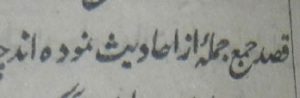
It is worth mentioning that in some texts of that period, including the lithographed print of ʿAbaqāt, in order to show such a suffix, they would write the word with a small yāʾ, such as “جملۀ”. For example, this phrase:
“تصريح كردهاند كه احاديث صحيحه را ما استيعاب نكردهايم، بلكه قصد جمع جملهای از احاديث نمودهاند”
appears in this form in the lithographed print:
- In cases where the text differs from the source, sometimes the phrase or word present in the text is correct, and sometimes the opposite is the case; and sometimes neither what appears in the text nor what appears in the source is correct. In all such cases, the correct phrase has been placed in the text, and the difference has been noted in the footnote.
- In some instances, the names of persons (aʿlām) appearing in the text differ from the names appearing in the source. In such cases we have attempted, by referring to biographical sources and other early ḥadīth and historical sources, to determine the correct form. This has been done except where the name of the narrator was not accessible, or where in other sources as well the name appears in different forms and determining the correct form was not possible. In such a situation, we have only noted the difference between the form in the text and the source in the footnote.
- The meanings of difficult and unfamiliar words in Arabic and Persian expressions have been traced to their sources. If the word occurs in an Arabic expression, reference has been made to Arabic lexicons; and if it occurs in a Persian expression, reference has been made to Persian dictionaries.
- Additions of the editor in the headings, the text, and the footnotes have been placed within square brackets […].
- In order to distinguish the text and the commentary in books of sharḥ‑e mazjī (interwoven commentary), the original text has been reflected in bold type.
- The symbol “ḥ” indicates the lithographed edition of ʿAbaqāt, and “m” indicates the source.
- In referring to the marginalia of ʿAbaqāt or the marginalia of the source, respectively the expressions “ḥāshiyat‑e ḥ” and “ḥāshiyat‑e m” have been used.
- Reference to a single‑volume book is given in this form:
Ṭabaqāt al‑Ḥuffāẓ: 50.
- Reference to a single‑volume book with the ḥadīth number is given in this form:
Kanz al‑ʿUmmāl: 50/33.
(that is, page 50, ḥadīth 33)
- Reference to a single‑volume book with the entry number is given in this form:
Taqrīb al‑Tahdhīb: 70 / entry no. 40.
- Reference to a book of two or more volumes is given in this form:
Siyar Aʿlām al‑Nubalāʾ 2: 50.
- Reference to a book of two or more volumes with the ḥadīth number is given in this form:
Musnad Aḥmad 2: 50/33.
(that is, volume 2, page 50, ḥadīth 33)
- Reference to a book of two or more volumes with the entry number is given in this form:
al‑Kāshif 2: 70 / entry no. 40.
- All the marginal notes of the lithographed edition have been recorded. These marginalia have different types:
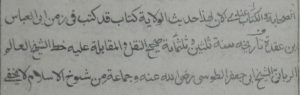
First: In the margin, there are phrases accompanied by the symbol “fـ” — which means “fāʾidah” (benefit). These fawāʾid sometimes serve to highlight and draw attention to a word or phrase in the text, such as:
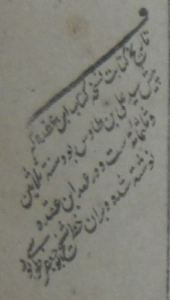
This fāʾidah has been placed above this text and has drawn attention to it:
Sometimes these fawāʾid indicate the title of a discussion that appears afterward, such as:
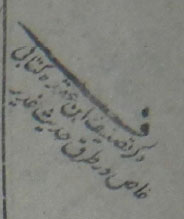
In the process of research, for selecting the headings, we have used these fawāʾid as well as the headings موجود in the running headers. If one of these fawāʾid has not been used in the headings, it appears in the footnote in this form:
fـ: mention of Ibn ʿUqdah’s authorship of a specific book on the chains of transmission of the ḥadīth of Ghadīr.
Of course, those fawāʾid which have been regarded as headings and incorporated into the main text have not been brought together with “fـ:”.
Second: In the first volume of the lithographed edition, the references of some quotations have been written in the margin; in this manner that the name of the chapter or section, the volume number, the page number, and beneath it, the total number of pages of the source copy have been written. For example, the reference to Ansāb al‑Samʿānī has been given in this form:
“Nisbat al‑Sahmī min bāb al‑sīn al‑muhmalah maʿa al‑hāʾ min ḥarf al‑sīn al‑muhmalah, 457/902.”
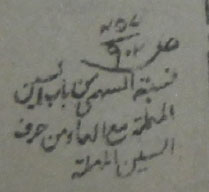
The number written above the line is the page number of the cited passage, and the number below the line is the total number of pages of the copy used by the author.
Since all the cited materials have been traced to their sources and references have been given to corrected printed editions, there was no need to mention these marginal notes, except in cases where we did not gain access to the source; in such cases we have included those marginal notes and have stated that we did not gain access to the source.
Third: In some of the marginal notes, an explanation concerning a word or phrase has been given. These marginal notes have been indicated by placing a number over the word or phrase in the text, and in the margin of the copy a corresponding explanation under the same number has been written.
If these explanations have been نقل from a book, the name of the book has been mentioned at the end of the marginal note. In some cases the name of the source has been written in full, and in some cases it has been written in abbreviated form. These abbreviations are as follows:
The symbol “m”: for the book Muntahā al‑Arab by Ṣafīpūrī. In most cases, this book has been used for translating words from Arabic into Persian.
The symbol “q”: for the book al‑Qāmūs al‑Muḥīṭ. For explaining Arabic vocabulary, this book has mostly been used.
The symbol “ṣ”: for the book al‑Ṣurāḥ min al‑Ṣiḥāḥ.
The symbol “qs”: for the book Irshād al‑Sārī written by Qasṭalānī (d. 923 AH). This symbol has been used only once.
In some of these marginal notes, the name of the source has not been mentioned; in such cases, if we gained access to the source, we have indicated it.
Some explanatory marginal notes have appeared between the lines; these marginal notes have also been brought into the footnotes.
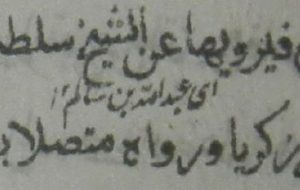
At the end of many of these marginal notes, the number “12” or “12 minhu” appears. Tāj al‑ʿUlamāʾ Sayyid ʿAlī Muḥammad ibn Sulṭān al‑ʿUlamāʾ (d. 1312 AH), the grandson of ʿAllāmah Ghufrān‑Maʾāb (d. 1235 AH), who was among the great scholars of India and a contemporary of ʿAllāmah Mīr Ḥāmid Ḥusayn (may Allah have mercy on them), has written in explanation of this symbol as follows:
وأمّا الحاشیة، کتبوا علیه رقماً أیضاً کما مرّ، ولکنّهم یختمونه علی رقم 12 ویَعنُون به «الحدّ»، ویرومون أنّه حدّ الحاشیة ونهایتها. وکون 12 رمزاً إلی «الحدّ» ظاهر؛ فإنّ أعداد حروف «الحدّ» ذلك؛ لأنّ الحاء المهملة عددها 8 والدالّ المهملة عددها 4 ومجموعها 12.
وهذا في غیر «المِنْهِیّة»، وأمّا «المِنْهِیّة» فیُکتب في آخرها مع الرقم المزبور أعني به 12 «منه»، بخلاف غیرها؛ فإنّه یُرسم فیه بعد العدد المزبور اسم المحشّي غالباً. والمعهود من الضمیر المجرور في «منه» مصنّف الکتاب. و«المِنْهِیّة» مولّدة من «منه» زیادةً لیاء النسبة في آخره، والتاء للتأنیث باعتبار کونه صفة للحاشیة، وکلّ ذلك ظاهر.
Footnote:
. al‑Jawharah al‑ʿAzīzah (within Rasāʾil fī Dirāyat al‑Ḥadīth) 2: 459 and 460.
In the Niẓāmī Press edition of Paris—which belongs to the period after the death of the author—at the end of three explanatory marginal notes the symbol “n” appears. This symbol refers to the author’s eldest son, ʿAllāmah Nāṣir Ḥusayn (d. 1361 AH).
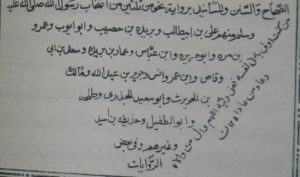
Also, in this same edition, at the end of one two‑page marginal note the symbol “dh” appears. This symbol refers to Dhākir Ḥusayn (d. 1358 AH), another son of the author and the younger brother of Nāṣir Ḥusayn.
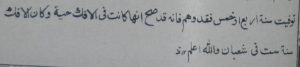
It should also be mentioned that in one marginal note in the Majmaʿ al‑ʿUlūm edition the symbol “n” has also appeared.
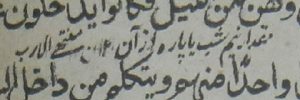
Fourth: In some marginal notes, conjectural remarks (istiẓhārāt) have been given in order to indicate the possible occurrence of a textual corruption (taṣḥīf) in the text; in this manner that over the word or phrase in question in the text, the symbol “ẓ” has been written, meaning “apparently”. Then in the margin the symbol “ẓ” is repeated and the correct or more correct word or phrase is written beside it. These marginal notes have been recorded in the footnotes. For example:

Footnote:
. Muʿjam al‑Rumūz al‑ʿĀmmah 2: 343.
In many cases, the symbol “ẓ” appears together with “lahu”, which probably means “badalahu” (instead of it), or it may indicate that the word appearing in the text belongs to the source; however, apparently the correct reading is that which has been noted in the margin. For example:
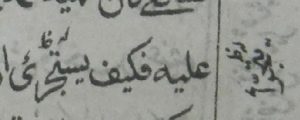
Fifth: In some cases, the copyist mistakenly omitted a word or phrase from the text; later, during the rereading, that phrase was restored and written in the margin. This has been done in such a way that its place in the text has been marked with a curved sign resembling the number “7”, and in the margin, after the same curved mark, the omitted phrase has been written. This type of marginal note in the lithographed edition is indicated by the symbol “ṣaḥ”, which appears at the end of the phrase. For example:
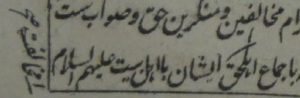
In the present research edition, these instances have been added to the main text, and the omission in the lithographed edition has not been indicated.
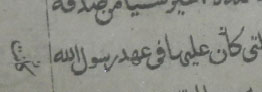
Sixth: In some marginal notes, reference has been made to a variant reading of the source; in this way that above the relevant phrase the symbol “n” has been placed, and in the margin, after the symbol “n”, the phrase that appears in another copy of the source has been written. For example:
Footnote
. Ibid. 2: 587.
Another example:
Acknowledgment and Appreciation
At the end, it is incumbent upon us to express our thanks and appreciation to all the honorable individuals who assisted us in reviving this noble work. Among them are the esteemed researchers: Mr. Sayyid Ṣādiq Hāshimī, who cooperated in the takhrīj of a part of this book; Ḥujjat al‑Islām Muntaẓirī; and Ms. Riḍāʾī, who collaborated in the collation of a portion of this work.
Images of the Manuscripts
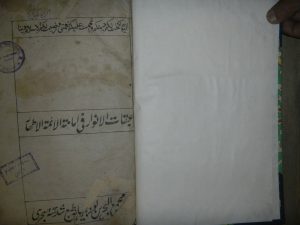
The first page of the first volume of the “Majmaʿ al‑Baḥrayn” edition (Image 1).
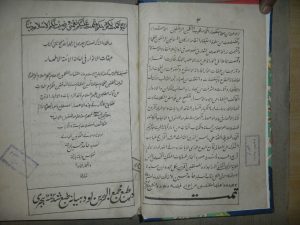
The fifth page of the first volume of the Majmaʿ al‑Baḥrayn edition (Image 2).
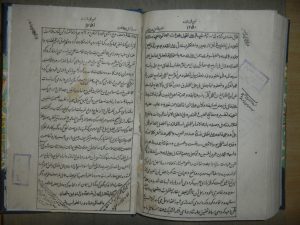
The final page of the first volume of the Majmaʿ al‑ʿUlūm edition (Image 3).
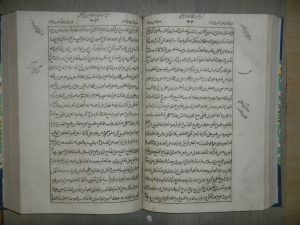
Pages 602 and 603 of the first volume of the Majmaʿ al‑ʿUlūm edition (Image 4).
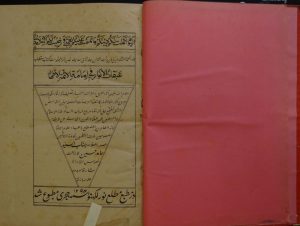
The first page of the first part of the second volume (Image 5).
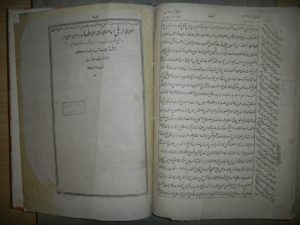
The final page of the first part of the second volume (Image 6).

The final page of the Niẓāmī Press edition (Image 7).
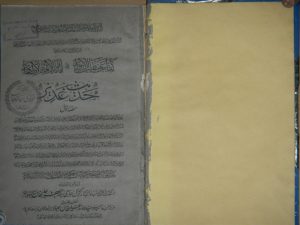
The first page of the first volume of the Niẓāmī Press edition (Image 8).
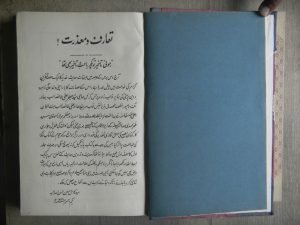
The preface of the Niẓāmī Press edition in Urdu (Image 9).
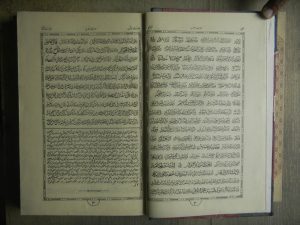
The second and third pages of the Niẓāmī Press edition (Image 10).
Muḥammad‑Mahdī Dalīr – Mujtabā Nāẓimī Qumshānī
14/5/1403 – 29 Muḥarram al‑Ḥarām 1403 AH
Holy Qum