Re-examining “Hadith al-Wilayah” in ʿAbaqāt al-Anwār
Among the hadiths cited in explaining the question of Imamate, “Hadith al-Wilayah” holds an important and noteworthy position.
This hadith, with expressions such as “ʿAlī is your wali after me,” as well as the related traditions, is among the textual proofs that have been discussed and disputed throughout history in theological debates concerning Imamate.
In this regard, the monumental work ʿAbaqāt al-Anwār, authored by Allamah Mīr Ḥāmid Ḥusayn Lucknawī, is regarded as one of the most important efforts in the comprehensive examination of this hadith.
The Position of Hadith al-Wilayah in ʿAbaqāt
Hadith al-Wilayah is examined within the framework of the “Second Manhaj” of ʿAbaqāt, namely, the hadith-based section of the work.
In this Manhaj, the Allamah analyzes the indication of a collection of hadiths whose indication concerning the Imamate of Amīr al-Muʾminīn ʿAlī (peace be upon him) had been doubted or denied by opponents.
Hadith al-Wilayah is among these central hadiths.
The Structure of the Examination of Hadith al-Wilayah
The examination of this hadith in ʿAbaqāt has been organized in several independent volumes. (Three volumes according to the available reports.)
Several fundamental themes are pursued in these volumes:
- Collection of the Reports
In the first stage, the various reports of Hadith al-Wilayah have been collected from different sources, especially Sunni works.
This extensive investigation demonstrates the Allamah’s effort to present a comprehensive picture of the presence of this hadith in the hadith heritage of Muslims.
- Examination of the Chains of Transmission
Subsequently, the transmitters of the hadith in the various generations are evaluated through rijāl-based analysis.
In this section, the reliability of the reports is examined by referring to Sunni biographical-evaluative sources, and the strengths and weaknesses of each transmission route are identified.
- Analysis of the Indication
A significant part of the Allamah’s work is devoted to analyzing the indication of the hadith.
At this stage, the meaning of “wilayah” in the text of the hadith is examined in light of verbal and contextual indications, and the various views concerning it are criticized.
In this section, the Allamah seeks to demonstrate that the intended meaning of wilayah in this hadith goes beyond friendship or support and refers to a form of authority and priority in exercising authority.
- Responding to Objections
Finally, the objections and doubts raised concerning the indication of the hadith are examined and answered in detail.
This section is a clear example of the Allamah’s dialectical methodology in ʿAbaqāt; a methodology in which the opponent’s view is first reported accurately and is then criticized step by step.
The Position of This Section in the Argumentative System of ʿAbaqāt
Hadith al-Wilayah, alongside hadiths such as Ghadir, Thaqalayn, and Madinat al-ʿIlm, is regarded as one of the pillars of the transmitted argumentation in ʿAbaqāt.
The examination of this hadith shows that, in explaining the question of Imamate, the Allamah did not suffice with a single textual proof, but rather analyzed a collection of textual proofs together in a systematic manner.
Revival and Publication
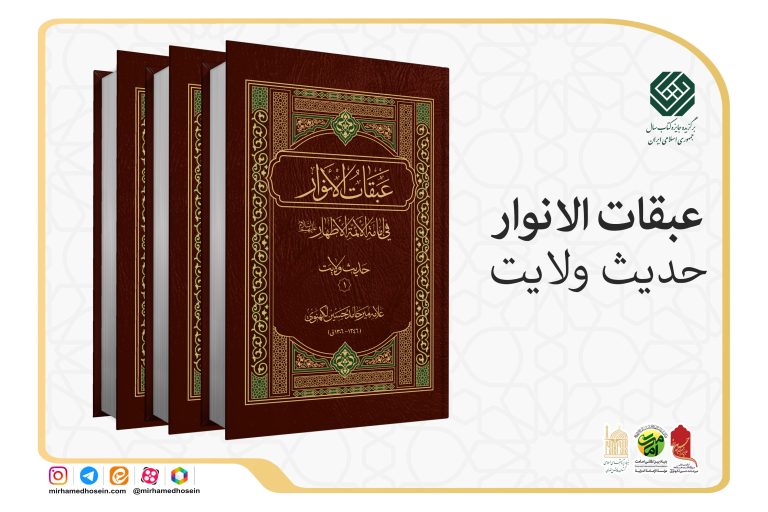
In the project for the revival of the works of Allamah Mīr Ḥāmid Ḥusayn, the section devoted to “Hadith al-Wilayah” has been published in three volumes.
This undertaking represents an important step toward making this section of ʿAbaqāt accessible to researchers and those interested in discussions on Imamate.
Conclusion
The examination of “Hadith al-Wilayah” in ʿAbaqāt al-Anwār is a clear example of Allamah Mīr Ḥāmid Ḥusayn’s scholarly methodology; a methodology in which extensive investigation, precise analysis of chains of transmission, and multilayered analysis of indication are brought together.
Re-examining this section can make a significant contribution to a more precise understanding of the argumentative foundations concerning the question of Imamate and the manner in which Shi‘a scholars dealt with disputed textual proofs.
For further acquaintance with Hadith al-Wilayah in ʿAbaqāt al-Anwār and the measures undertaken to revive this book, read the introductory article to this book written by its reviver