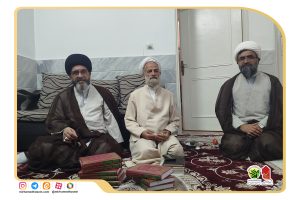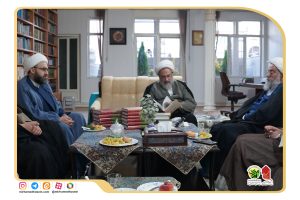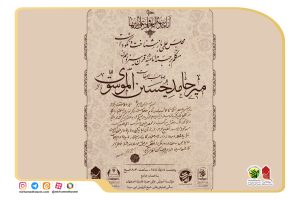
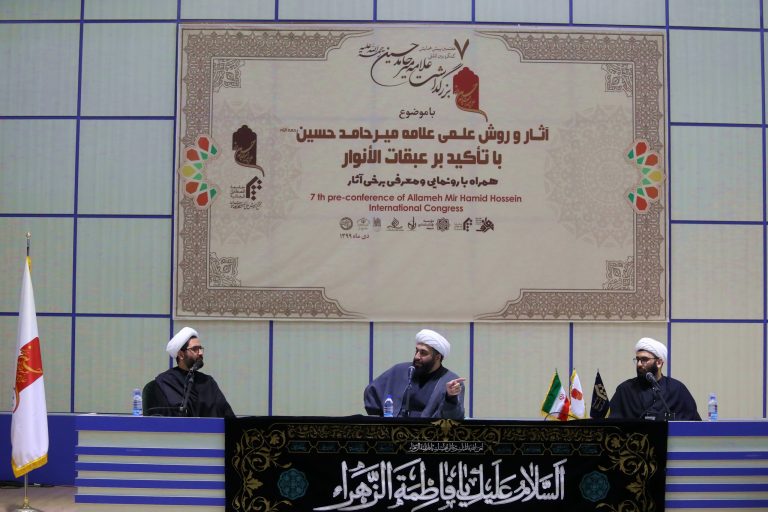
At the seventh pre-conference of the International Congress on Allama Mir Hamid Husayn (may Allah have mercy on him), researchers in the field of Imamate and Abaqat al-Anwar presented their findings.
Hujjat al-Islam wal-Muslimin Mahdi Esfandiyari, the academic secretary of the congress and head of the Revival of Works unit, stated:
“The ideas and methodology of Allama Mir Hamid Husayn, along with his teachers and students, are of such value that they elevate the Lucknow theological school to a position of great importance among other Shi’a theological schools.” He noted that one of the distinguishing features of Allama Mir Hamid Husayn’s works is their comprehensiveness in various dimensions, a result of the Allama’s deep familiarity with and attention to the contributions of other Shi’a scholars and theological schools.
He further emphasized the fairness and wisdom in Allama Mir Hamid Husayn’s critiques of opponents of the Ahl al-Bayt (AS), stating that even today, no one can misuse Abaqat al-Anwar. The Allama presented potentially contentious discussions in a manner that preserved scholarly integrity and logical discourse.
Following him, Hujjat al-Islam wal-Muslimin Hamid Kashani, a seminary and university professor, shared his insights. Due to time constraints, he highlighted three key features of Allama Mir Hamid Husayn’s research and authorship.
The first notable feature of Abaqat al-Anwar, according to him, is its unshakable scholarly strength. He explained that when researchers study this work, they encounter such powerful and compelling arguments that the objections raised by Shah Abdul Aziz in Tuhfa appear trivial and unworthy of response—a testament to the Allama’s decisive and robust refutations.
The second feature he emphasized was the depth and breadth of Allama’s research. He noted that while researchers typically consult sources directly related to their topic, Abaqat al-Anwar references materials that, at first glance, seem unrelated but contain content that supports and reinforces the Allama’s arguments—demonstrating his exhaustive research efforts.
The third remarkable feature was the extensive range of sources and the immense effort in gathering them. Many of these sources are now only available in the Nasiriyya Library, and in some cases, Sunni scholars, lacking access to original texts, have had to rely on Allama Mir Hamid Husayn’s works to cite their own scholars.
Hujjat al-Islam wal-Muslimin Darahi, the secretary of the Methodology Working Group for Allama Mir Hamid Husayn’s works, also spoke at the session. He reported on the group’s activities and highlighted key points, stating:
“Our endeavor is to understand and elucidate Allama Mir Hamid Husayn’s methodology. By methodology, we mean the processes, principles, tools, and techniques he employed to prove the Imamate of Amir al-Mu’minin (AS) and refute the objections of Dehlawi.”
He noted that studying Allama’s methodology paves the way for innovation in Imamate studies, facilitates educational systems, and strengthens contemporary discourse on Imamate research.
He categorized different methodological approaches and elaborated on hadith validation methodology, which consists of three key steps employed by Allama Mir Hamid Husayn:
- The presence of the hadith in reliable books
- Proving the authenticity of the hadith through criteria of sound narrations
- Utilizing a network of semantic connections
Each of these methods involves intricate and detailed discussions, which will be presented in various sessions and events, particularly at the main congress, for interested audiences.