First Preliminary Conference of the International Congress Commemorating Allama Mir Hamid Hussain of Lucknow

First Preliminary Conference of the International Congress Commemorating Allama Mir Hamid Hussain of Lucknow


In the Name of God, the Most Compassionate, the Most Merciful


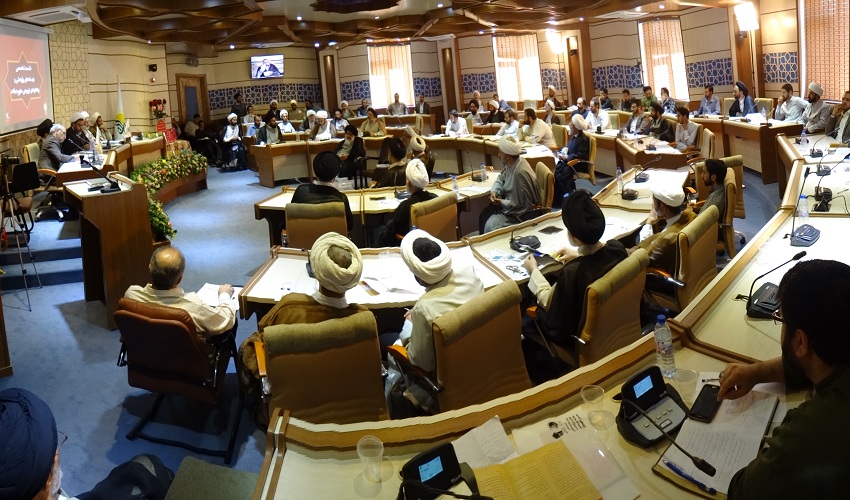
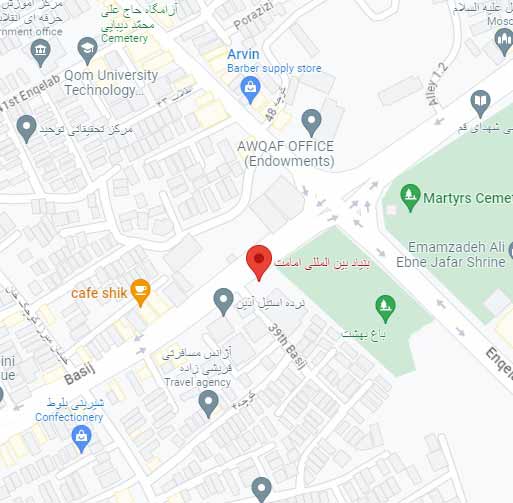
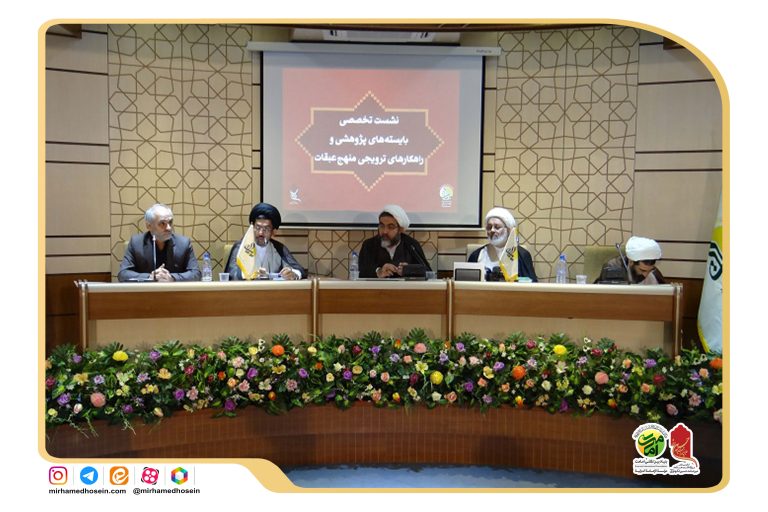
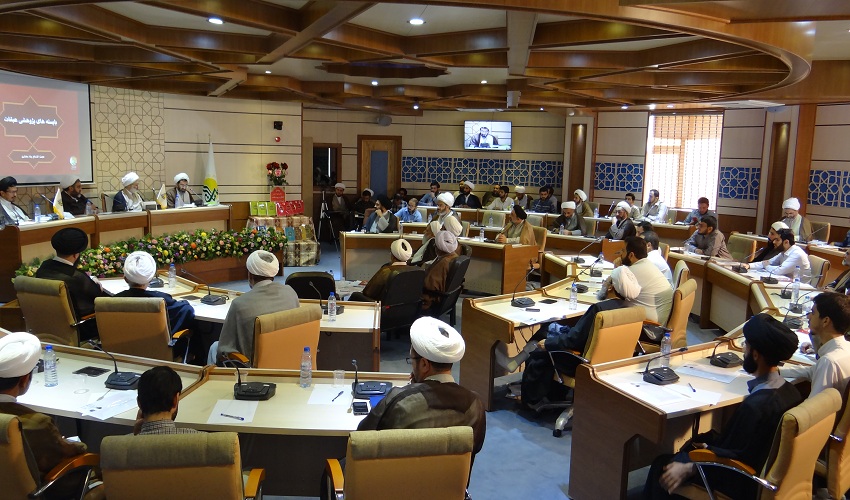
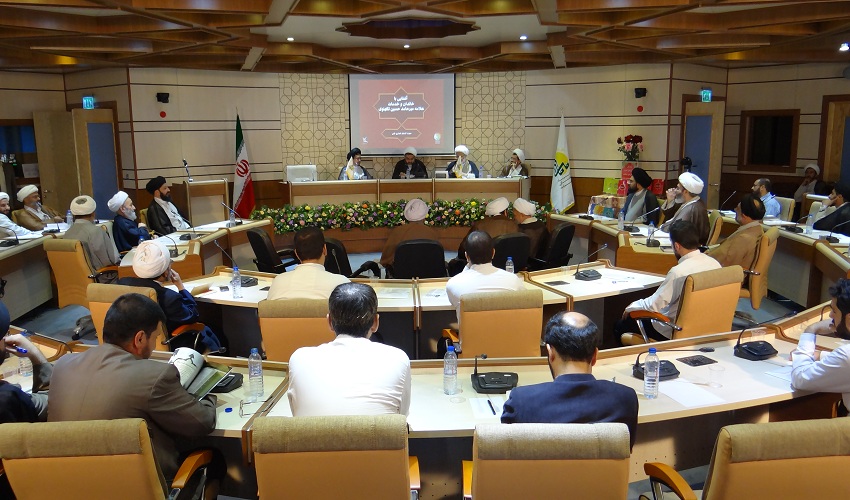
The Secretariat of the International Congress Commemorating Allama Mir Hamid Hussain of Lucknow held its first preliminary conference on Thursday, 8th Mehr 1395 (September 2016) at the Imamate Cultural Foundation, attended by numerous scholars, professors, and researchers from seminaries and universities.


The conference began with welcoming remarks by Hujjat al-Islam Dr. Mohammad Taqi Sobhani, Academic Secretary of the Congress, who emphasized the significance of this congress and introduced the author of “Abaqat al-Anwar” and his valuable works. Dr. Seyyed Mehdi Alizadeh Mousavi then delivered the first lecture on “Genealogy of Anti-Shia Movements in India.”


As head of the Hajj and Pilgrimage Research Institute, Dr. Alizadeh Mousavi analyzed Sunni-Shia relations in the Indian subcontinent throughout history. He noted that Islam first entered the region during the caliphate of Umar ibn al-Khattab through military expeditions, establishing a Sunni interpretation in the subcontinent. The lecturer examined Muslim-Shia interactions during the Mughal era, colonial period, and after Pakistan’s formation, particularly focusing on the anti-Shia theological positions of Shah Waliullah Dehlawi and his son Shah Abdul Aziz Dehlawi.


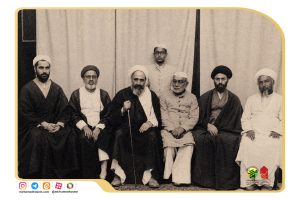
Hujjat al-Islam Ansari Qumi subsequently spoke on “Introducing the Abaqat Family and the Contributions of Allama Mir Hamid Hussain of Lucknow.” He presented a detailed biography of Syed Mohammad Quli, Allama’s father, highlighting his scholarly lineage, education, judicial career, and major works. Ansari Qumi described Allama Mir Hamid Hussain as one of “God’s signs and the proofs of Twelver Shiism.”


The final speaker, Hujjat al-Islam Reza Mokhtari, addressed “Research Priorities for Abaqat Studies.” Emphasizing the critical importance of manuscript preservation in contemporary scholarship, he noted that many universities worldwide accept critical editions of manuscripts as doctoral dissertations. Mokhtari stressed the need for meticulous textual criticism in editing Allama’s works.


The conference concluded with an academic panel discussion on research methodologies for Abaqat studies, moderated by Dr. Sobhani and Dr. Abdolhossein Talei of Qom University, featuring contributions from attending scholars.


Side events included the unveiling of newly edited works from the Abaqat family such as “Ifham al-A’da wal-Khusum,” “Al-Adhb al-Battar,” “Al-Sawarim al-Ilahiyyat,” and “Dhulfaqar,” along with an exhibition introducing Allama Mir Hamid Hussain and the congress’s virtual portal.
Leave a Comment

Your email address will not be published. Required fields are marked *

Notes

The Splendor of the Lucknow School in the Indian Travelogue of the Author of *al-Ghadir

The primary objective of this historic journey was to gain access to early, first-hand sources from both sides and to transcribe rare documents for the completion of the volumes of *al-Ghadir* and the enrichment of the Amir al-Mu’minin Library in Najaf. The highlight of the journey was his month-long stay in Lucknow, the warm hospitality and companionship of the Abaqat family, and the indescribable amazement of the author of *al-Ghadir* at the unparalleled holdings of the Nasiriyya Library—an event that immortalized the bond between two major centers devoted to defending the doctrine of Imamate in Najaf al-Ashraf and Lucknow.

Notes

Article: A Critique and Review of the Critical Edition of “Hadith Ali ma‘a al-Haqq” from Abaqat al-Anwar: Critical Editing and Research, or Corruption and Distortion?

“Hadith Ali ma‘a al-Haqq,” from the Abaqat al-Anwar encyclopedia, is an incomplete manuscript section that became available to researchers in recent years. This section consists of a collection of unorganized research slips and rough notes, most of which were written by copyists unfamiliar with the relevant vocabulary and terminology; consequently, what has survived is a disordered text containing numerous errors. Recently, a portion of these notes that possesses greater order and continuity was selected by an institute in Qom and published with grand claims of “critical editing, research, and annotation” and described as “a rarely matched scholarly investigation.”

Manuscript Repository

The Researcher’s Introduction to the Revival of the Qur’anic Verses Section of Abaqat al-Anwar

The present volume is a researched and critically edited edition of this monumental work. In preparing this edition, every effort has been made, as far as possible, to exercise the degree of precision, patience, and diligence befitting the critical editing and study of an exceptional work such as Abaqat al-Anwar, and to honor the efforts of the devoted scholar Allamah Mir Hamed Hussain Lakhnawi in compiling this book by presenting a sound and critically established text. Accordingly, an effort has been made to produce a final text so thoroughly refined, corrected, and critically examined that the reader of Abaqat al-Anwar will perceive no difference in editorial quality between its First Manhaj, whose two extant copies are manuscripts, and its Second Manhaj, whose surviving copies are printed and well preserved.

News & Announcements

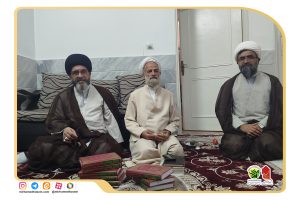
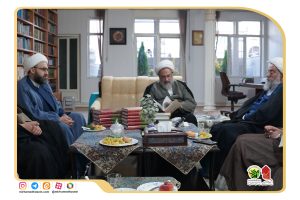
President and Members of the Secretariat of the International Congress Commemorating Allamah Mir Hamed Hussain Meet with Ayatollah Alidoost

During a meeting between the president and members of the Secretariat of the International Congress Commemorating Allamah Mir Hamed Hussain and Ayatollah Abolqasem Alidoost, a report was presented on the progress of reviving 70 volumes of the heritage of the Lucknow scholarly school, preserving the documents of the Nasiriyya Library, and extracting the theological methodology of the author of Abaqat al-Anwar. The distinguished professor of the Qom Seminary also referred to the enduring impact of text-centered conferences and emphasized the systematic analysis of the manner in which Allamah interacted with the hadith heritage, the observance of proper etiquette in criticism, and the avoidance of non-academic disputes in the contemporary context.

Scroll to Top