The Anecdote of the Allamah’s Absence from His Son’s Funeral

چکیده: It is narrated that one of the Sayyid’s sons passed away, and he was informed to attend the funeral. The Sayyid was deeply affected by the death of his son, yet he instructed them to proceed with the shrouding and burial themselves, as he had no time to participate in the mourning.

The Anecdote of the Allamah’s Absence from His Son’s Funeral**

How is it possible that a father would not leave his library, his pen, his inkwell, his writing, and his studies upon hearing the news of his young son’s death?

It is said that one of the Sayyid’s sons passed away, and he was informed to attend the funeral. The Sayyid was deeply affected by the death of his son, yet he instructed them to proceed with the shrouding and burial themselves, as he had no time to participate in the mourning. The people imagined—God forbid—that his senses had been impaired upon hearing the news of his son’s death; otherwise, how could a father, upon hearing the news of his young son’s death, not leave his library, his pen, his inkwell, his writing, and his studies, and continue to read and write books as he always did?!

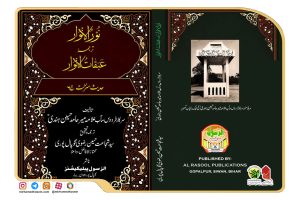
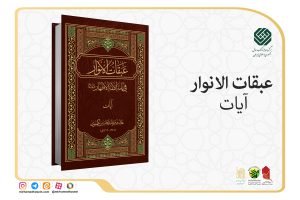
**Writing the book «عبقات الانوار» is more obligatory and superior to attending the funeral of my young son.**

The Sayyid understood through his insight what the people were thinking, so in response to their assumption, he said:

«Writing the book «عبقات الانوار» is more obligatory and superior to attending the funeral of my young son, and I do not have the time for this. You go on my behalf, make arrangements for the shrouding, burial, and mourning of my departed young son, and leave me with the writing of my book so that I may cite the words of the great scholars of the Ahl al-Sunnah to prove the truthfulness of «علي المرتضى»; for «Ali has been perceived in darkness».»

Leave a Comment

Your email address will not be published. Required fields are marked *

Research Resources

A Brief Survey of the Ḥadīth of Ghadīr in ʿAbaqāt al‑Anwār

Despite the many discussions surrounding the Ḥadīth of Ghadīr throughout history, before the writing of ʿAbaqāt al‑Anwār one cannot find a work that has addressed all aspects of this ḥadīth in detail and responded to the various objections of the Sunnīs regarding its chain (isnād) and implication (dalāla). Indeed, the efforts of ʿAllāma Mīr Ḥāmid Ḥusayn al‑Hindī were not limited to responding to the objections of ʿAbd al‑ʿAzīz al‑Dehlawī; rather, by tracing the roots of the doubts, he used Dehlawī’s statements as a basis for presenting and critiquing the statements of earlier Sunnī scholars, leaving behind a comprehensive and solid work. May Allah have mercy upon him and grant him a good abode.

Notes

Re-examining the “Manhaj of the Verses” in ʿAbaqāt al-Anwār

Among the different sections of ʿAbaqāt al-Anwār, its “First Manhaj” holds a fundamental position in explaining the question of Imamate. This section, commonly known by the title “Verses,” may at first appear to be devoted solely to examining the verses that indicate Imamate; however, a more careful study of the structure of ʿAbaqāt shows that this understanding is incomplete and, to some extent, incorrect.

Notes

Re-examining “Hadith al-Ghadir” in ʿAbaqāt al-Anwār

Among the textual proofs related to the question of Imamate, Hadith al-Ghadir holds a special position. This hadith, which has been transmitted with the well-known wording, “Whoever I am his mawla, then this ʿAlī is his mawla,” is among the traditions that have received extensive attention from Muslim scholars throughout history. However, a comprehensive and methodical examination of this hadith requires extensive investigation across various sources and a precise analysis of both its chain of transmission and its indication.

Notes

Re-examining “Hadith al-Wilayah” in ʿAbaqāt al-Anwār

The examination of “Hadith al-Wilayah” in ʿAbaqāt al-Anwār is a clear example of Allamah Mīr Ḥāmid Ḥusayn’s scholarly methodology; a methodology in which extensive investigation, precise analysis of chains of transmission, and multilayered analysis of indication are brought together.

Scroll to Top